
Bali Belly: How to Prevent, Treat & Recover Fast
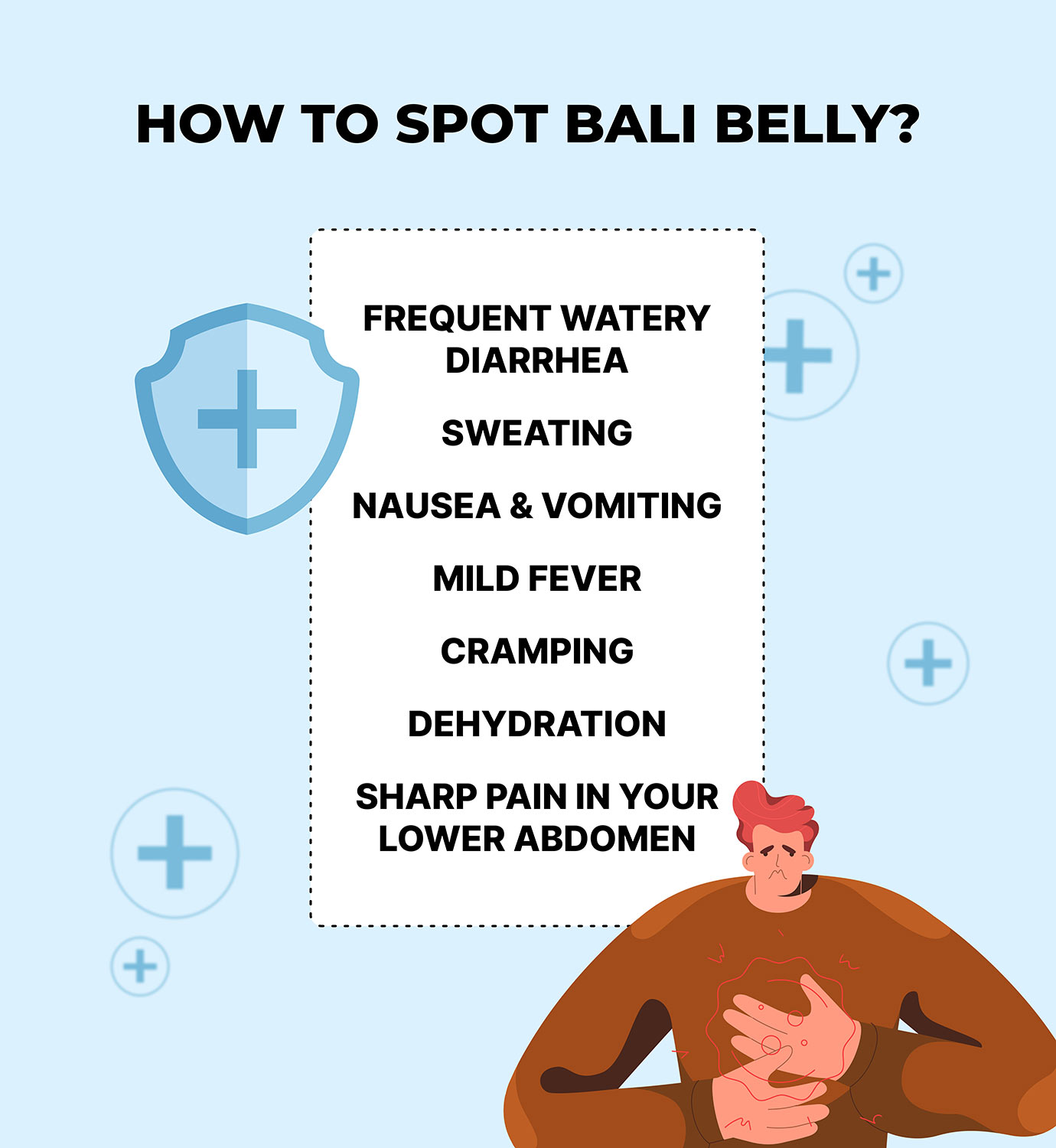
You’re so excited to explore the waterfall, but then, out of nowhere, you feel the knot in your stomach. You start to sweat profusely, you have no energy left, and you run back and forth to the toilet. Congratulations, you’re officially joining the Bali Belly club!
Jokes aside, I know getting Bali Belly is every traveler’s worst nightmare. But, what is actually Bali Belly, and how do you contract it? Get your notes ready as I will tell you everything about the meaning of Bali Belly, why it’s been haunting travelers coming to Bali for decades, and how you can save yourself from having it. Scroll down to read everything about Bali Belly and never let it ruin your holiday ever again!
What Is Bali Belly?
What the hell is Bali Belly? In simple terms, it’s traveler’s diarrhea. Sounds very specific, right? It’s because the diarrhea only affects travelers coming to Bali and not locals. The reason you get Bali Belly is because your stomach gets upset. Whatever the food you eat and the water you drink, it contains bacteria, parasites, and viruses that your gut is not familiar with. If you come from a country where the standard of food hygiene is strict, then your tummy will practically welcome strangers.
The culprit for Bali Belly is a variety of bacteria, which often appear when you eat undercooked meat, contaminated water, or when your food is not appropriately handled. So, how does it differ from food poisoning? Well, food poisoning often comes from one single food (think of that dodgy salad you eat at a potluck) and locals can contract it as well. But Bali Belly is an accumulation of everything you consume over a few days. Contrary to popular belief, it never comes from one single food!
Bali Belly Symptoms & When to Seek Help
Okay, now, how do you differentiate the mild or the severe case from the Bali Belly symptoms? If you can still function despite using the toilet three to five times a day, then you have a mild case. But if your fever exceeds 38°C, you experience constant thirst, have low energy, your diarrhea keeps going after 48 hours, extreme pain in your stomach, and feel dizzy, then you have a severe case. Your only option is to seek medical help as soon as possible.
How to Avoid Bali Belly
Now that you know the cause and the symptoms, how to prevent Bali Belly from ruining your trip? Though there’s never a 100% guarantee you’ll be safe from Bali Belly, knowing how to avoid it gives you a pretty good chance of saying no to this nightmare.
Never, ever, drink tap water in Bali, even in the most upscale places. Tap water in Bali is not for drinking, or even brushing your teeth.
Always bring your water bottle or order bottled water when eating outside.
Avoid ice cubes in small warungs or shady places.
Don’t be a spicy warrior if you aren’t used to spicy food.
Raw meats, sushi, and seafood in questionable places are a no-no!
Always choose a place where they cook your food when you order.
Bring hand sanitizer everywhere you go, or always wash your hands.
Always double-wipe the cutlery if you’re not sure they’re clean.
What to Eat & Drink
Safe Food & Drink
Skip Food & Drink
Banana
Spicy, oily, and greasy food
Plain white rice
Ice cubes
Applesauce
Raw seafood and meats
Dry white toasted bread
Dairy products
Skinless boiled/steamed potatoes
Caffeine
Boiled/steamed veggies
Alcohol
Bone/chicken/veggie broth
Raw fruits and vegetables (aside from banana)
Baked skinless chicken
Coconut water (find the green coconut variety, if you can)
Herbal teas (ginger, peppermint, chamomile)
Bottled water
Electrolytes drinks
Bali Belly Treatment & Home Cure
Can you cure Bali Belly at home? Absolutely! Here are some of the home remedies you can use to fight those bacterias in your stomach.
Drink plenty of fluids, especially oral rehydration solutions. You can buy electrolyte drinks like Gatorade or Pocari Sweat. You can also make your own by mixing half a teaspoon of salt, six teaspoons of sugar, and a liter of water. Locals often prefer coconut water over store-bought electrolyte drinks.
Herbal teas, such as peppermint and ginger, help soothe the stomach, reduce cramps, and ginger has anti-nausea properties.
Activated charcoal helps neutralize toxins in the stomach by trapping them. Bring your own, or you can buy Norit in the drugstore in Bali.
Loperamide (Imodium) helps in reducing your trips to the bathroom
The best medicine for Bali Belly is getting enough rest. Remember, your body needs to fight those unknown bacteria and viruses.
Antibiotics & Medical Advice
The first thing you think of when having Bali Belly is the antibiotics. You’re not wrong, but if the cause is a virus or parasite, then antibiotics won’t help. If you have a mild case, you won’t need antibiotics. But if your symptoms last for more than 48 hours, you have a high fever, severe dehydration, dizziness, and excruciating cramps, then your healthcare provider may prescribe an antibiotic.
Depending on the drugstore, you may be able to buy Norfloxacin, Ciprofloxacin, and Azithromycin over the counter as a treatment for Bali Belly. I don’t recommend this practice because antibiotic use should be under the supervision of a medical professional. If you think you have a severe case of Bali Belly, go to the hospital/clinic, and they will know how to identify your symptoms and treat them.
Bali Belly Parasites Explained
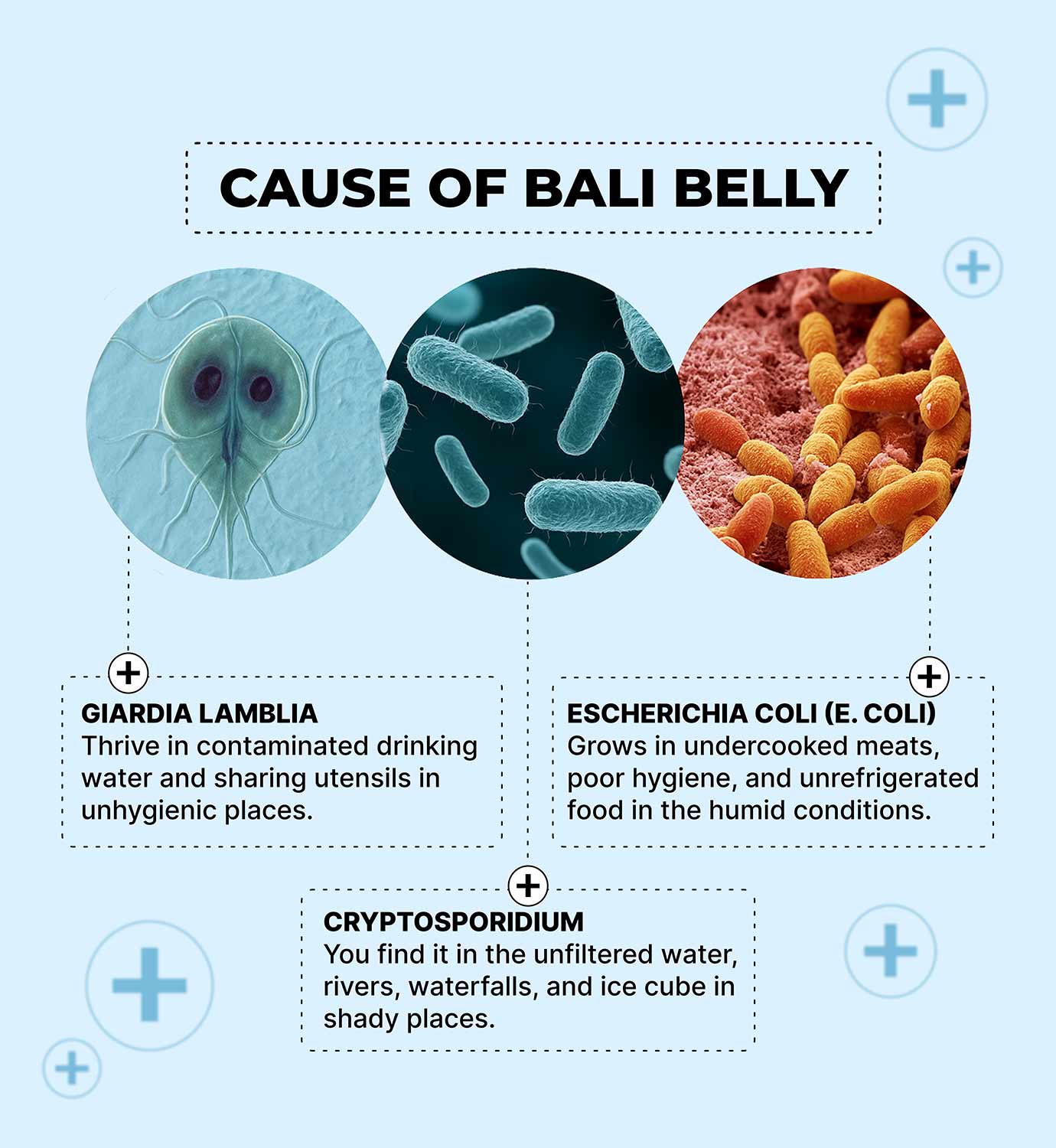
If there’s something to blame for your Bali Belly, it’s the bacteria Escherichia coli (E. coli). But sometimes, parasites like Cryptosporidium and Giardia Lamblia can be the source of your Bali Belly. Parasites often thrive in contaminated water, whether it is in ice cubes or beverages made with tap water. But drinking is not the only way you can catch these parasites. Natural water sources like rivers and waterfalls are Cryptosporidium’s favorite place as it’s resistant to chlorine treatment.
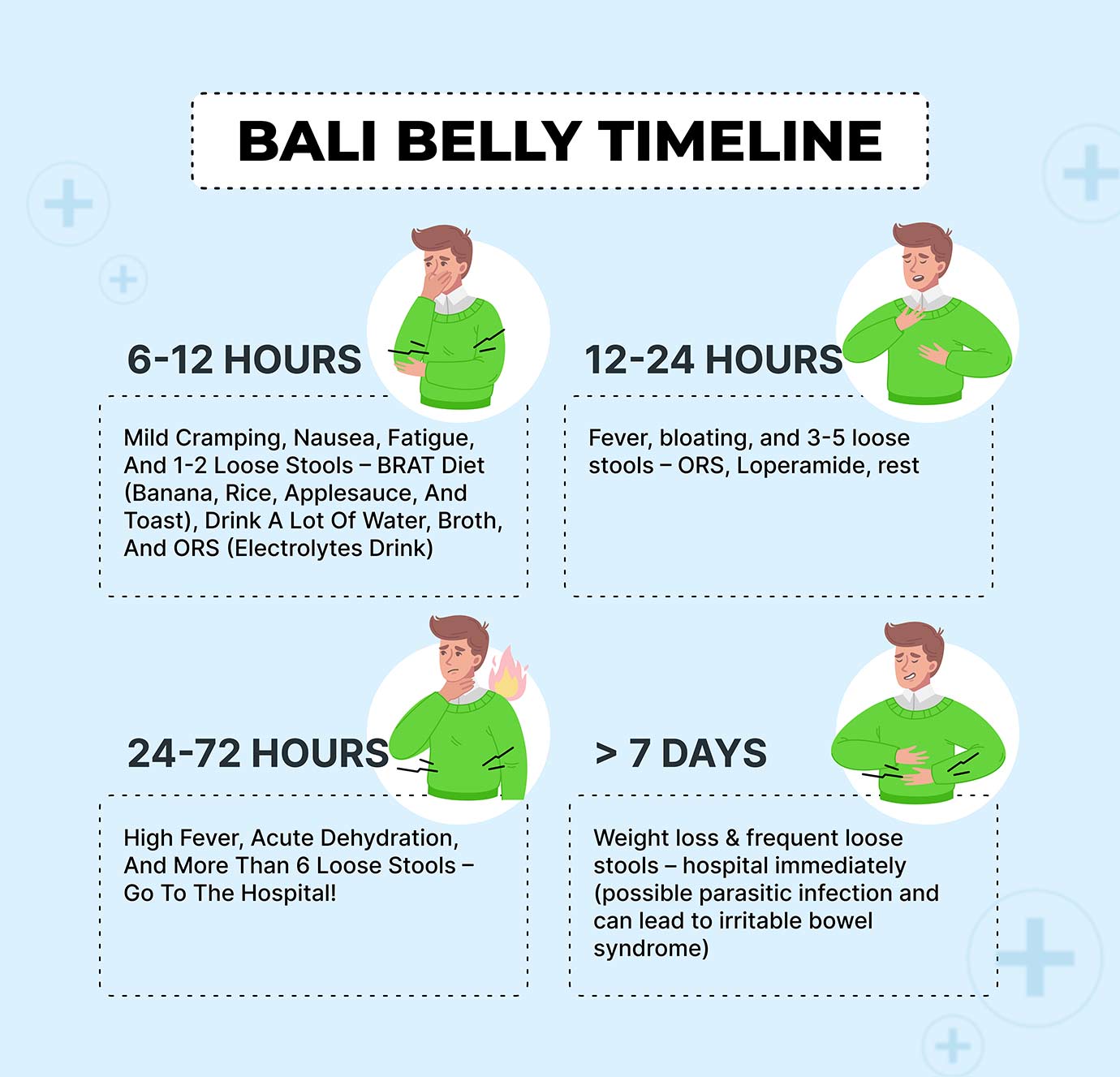
How long does the Bali Belly last? You should get back on your feet after a week. But if your symptoms persist for more than 72 hours, accompanied by acute diarrhea, bloating, and fatigue, you have likely contracted the parasites, not the bacteria. The first aid is to go straight to the clinic or hospital, and they will prescribe you specific medications to tackle these parasites. Again, never self-diagnose your condition!
Average Cost of Treatment & Insurance Tips
Getting sick while you’re traveling has never been fun, especially if it’s Bali Belly. That’s why having health insurance before coming to Bali can help you in many unfortunate situations (including bike accidents). While there are no fixed costs to treat Bali Belly, as it depends on the facilities and expertise of the medical professional, here are some rough guides about the cost of tackling Bali Belly:
Medical consultation costs around US$ 15 to US$ 35, depending on the clinic and hospital.
The complete check-up, which includes consultation, medication, and an IV injection (if needed), can cost as little as US$ 70 and up to US$ 150.
Hospitalization will cost you US$ 100 per day. The better the facilities, the higher the price, though they often have English-speaking doctors and nurses.
Anti-diarrhea medication like Norit (the activated charcoal) costs US$ 1.5 per tube with 40 tablets. You can buy Loperamide for US$ 15/strip in a drugstore like Guardian or Kimia Farma.
FAQs about Bali Belly
The mild case typically lasts 2–3 days, with the critical period of extreme diarrhea happening in the first 24 hours. Complete recovery may take up to a week. If your diarrhea persists for more than 48 hours, seek medical attention immediately.
Expert Opinion
Getting Bali Belly has never been fun, especially if you have plenty of checklists of what to do in Bali. While I can totally understand how frightening it can be, especially if it’s your first time, just pack yourself with all the info I’ve shared in this article, and you should be fine. My rule has always been three things: don’t drink tap water, don’t eat raw food, and no ice. While nothing can guarantee 100% that you won’t get Bali Belly, at least you take strict measures and know what to do and what not to do! Now, enjoy the beach and the sun because you’ve got all the info to shashay away the Bali Belly!





Hi, Catur here. I’ve been living in Bali for 12 years, and you bet I’ve done all the temple visits and explored Bali’s best beaches and waterfalls. Adding my hospitality background and 13+ years of fiction writing to the mix (four self-published Indonesian books and a 2020 Wattys Award), I’ve shared the local insight about 100+ restaurants, cafes, bars, hotels, and beach clubs on the island, because I want you to get the best experience!