Bali Currency Guide: Mastering the Rupiah in Bali
Who doesn’t love money? I bet everyone does! Now that you have the list of places to see in Bali, it’s time to talk about the one thing any Bali travel guide rarely discusses: the money, aka Indonesian Rupiah. With all the zeros that make you feel like a millionaire, understanding the Rupiah can get a little daunting. And if you’ve been searching for the perfect article about the denomination differences in Rupiah, or the best places to exchange your US Dollars or Euro, you’ve hit the jackpot!
While digital payments bring convenience and safety with just one tap, cash remains king in Bali. Although you can pay with a card in most restaurants and cafes, I still recommend keeping some cash on hand. I’ll hand you all the info related to the Rupiah, and take the article as your money guide bible for your Bali holiday. Get your pen and paper ready!
Which Currency Is Used in Bali?
The official currency in Bali is the Indonesian Rupiah. Please don’t confuse it with the Indian Rupee, as I often see people use or write these interchangeably (they’re not the same). Just like your Euros or US Dollars, the Rupiah has coins and notes, ranging from the smallest to the largest denomination. Here are your guides for it:
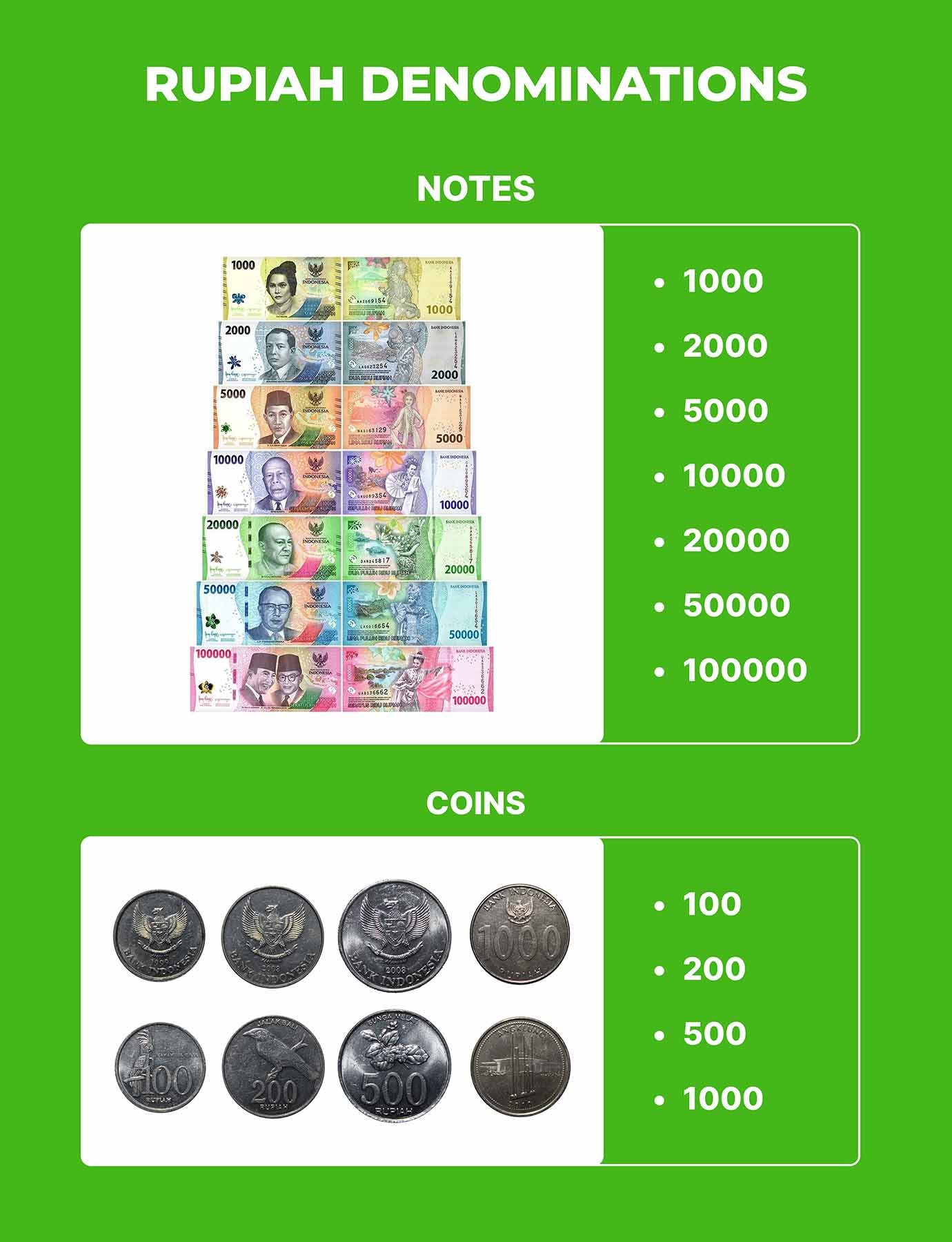
For Balinese, the small denominations, especially coins and small notes, are also used for ceremonial purposes. You often see them in the offerings. They also use old Chinese coins, called pis kopong/uang kepeng (because the money has a hole in the middle), in the ceremony as a symbol, although the money is no longer valid for transactional purposes.
Bali Currency Exchange: Money Changers vs ATMs
Should you exchange your money at the airport upon arrival? Or withdraw the money from the ATMs?
The rate you get will not be the same, as banks and airport kiosks often have lower rates than money changers. The difference may not look significant, as it’s only a few hundred Rupiahs, but if you exchange in substantial amounts, then the money changers give the best rates. If you need only a couple of hundred thousand Rupiah (say, 500K for a taxi), then taking the convenience of exchanging at airport kiosks or withdrawing from the ATMs is the way to go.
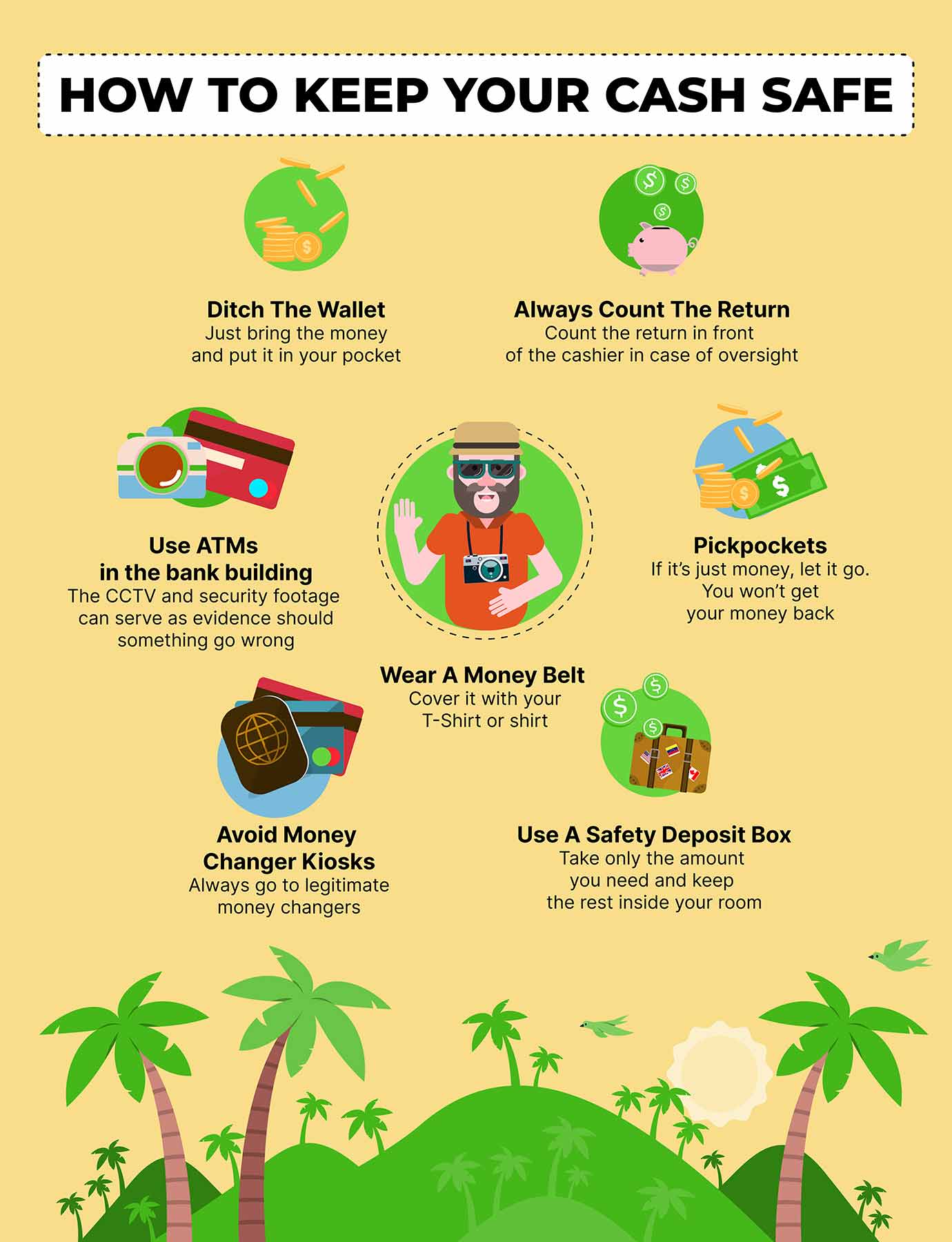
When you spot the ATMs, always check the signs at the door (such as Mastercard/Visa) to ensure you can withdraw the money. The best advice is always to use the ATMs located inside the bank during office hours. If everything goes wrong (your cards get swallowed or you suspect skimming activity), you can always ask the bank staff for assistance. I will definitely avoid using ATMs in gas stations or tourist areas, as the risk of ATM skimming is higher.
How to Spot Safe Money Changers
Going to money changers in Bali should be straightforward. But as in many tourist places, there are always shady places you should avoid at all costs! The legitimate and licensed money changers always occupy a building; often, you will see the word PT (Perseroan Terbatas) before the name of the company. That’s the money changers you can trust. They will provide you with receipts, and they always use the machine to verify the amount of money. The money is in good condition (not torn), and you often receive new notes.
How to spot the shady money changers in Bali? They usually occupy small kiosks on the side of the road, and highlight that they offer the best rates in Bali. Never exchange your money at these places, ever! They are notorious for scamming you with sleight of hand, so you’ll get less than you should receive.
Bali Best Rate – Where to Get the Most Rupiah
Paying with Crypto in Bali
Paying with cryptocurrency may be on the rise, but in Bali, I will advise against it. According to Law No. 7/2011 on Currency, the Rupiah should become the primary means of payment for any financial transaction within Indonesian territory. In 2024, the provincial government of Bali stated that tourists paying for services and goods in Bali using a currency other than the Rupiah (such as cryptocurrency) are subject to fines and may be punishable by law. The strict actions range from deportation and administrative sanctions to criminal penalties, including jail terms of up to a year and a fine of 200 million Rupiah (approximately US$ 150,000).
Budget Guide: What IDR Amount Do You Need?
So, how much should you spend on an average day in Bali? While it’s difficult to provide exact numbers, as everyone has different priorities and preferences, I can give you a rough estimate of how much you can spend in Bali.
Breakfast at a cafe: US$ 10 (IDR 150K) for a full meal and a coffee
Lunch at a local warung: US$ 5 (IDR 80K) for a meal and a drink (iced tea/juice)
Transportation: Starts from US$ 2 (IDR 30K), depending on the distance and peak hours for Gojek/Grab
Sundowner drink at a beach club: US$ 60 (IDR 800K) including entrance fee, snacks, and cocktails
Dinner at a restaurant: US$ 30 (IDR 500K) including drink
Tipping & Hidden Fees in Bali
The service charge and government tax in Bali are set at 21%. The government tax is fixed at 10% (VAT), while the service charge (this goes to staff) varies from one establishment to another, ranging from 5% to 11%. Whenever you go to a restaurant, spa, or hotel, you often see phrases like “prices subject to 21% of government tax and services,” which means the tax is not included. But some prices often already include the tax, especially if you eat at a small restaurant. Tipping is not compulsory, but feel free to do so if you appreciate the outstanding service!
Sometimes, a restaurant may charge an additional 3% for paying by card, and the staff will often inform you of this before you pay. One thing to note is that not every establishment accepts American Express (Amex) due to the higher merchant fees. It’s safer to bring other cards with you to Bali than relying only on Amex.
ATMs in Bali: How to Avoid Fees
You don’t need to be scared of using ATMs in Bali. If you can find these ATMs in your area, then you’re in luck because these ATMs don’t charge you a withdrawal fee! However, withdrawing money from ATMs in Bali has a low limit of IDR 2.5-3 million (approximately US$ 170-US$ 200). Also, remember to always charge in the local currency (Indonesian Rupiah) to avoid Dynamic Currency Conversion (DCC), which can result in poor exchange rates and additional fees.
Local and international banks with no withdrawal fees in the ATMs:
BNI
BCA (not applicable if you use an international network like Cirrus)
Mandiri
CIMB Niaga
HSBC
Maybank and Commonwealth may charge a small fee when you withdraw money through their ATMs. Alternatively, you can also use a Revolut or Wise card to withdraw cash, as these online services offer free withdrawals.
Useful Apps for Money Management
I highly recommend installing money or currency management apps on your phone when you’re in Bali. These apps will help you find the nearest ATMs, check exchange rates, and provide rough estimates of your ride fares.
ATM Locators: ATM Locators on iOS, Cash Now on Android, AllPoint (iOS & Android), and Revolut (if you’re a customer)
Fare checking: Grab/Gojek for transportation and food delivery
Currency exchange: Wise and XE Currency (iOS & Android)
Safety Tips for Handling Money
FAQs
The answer is due to the low exchange rates compared to other foreign currencies (USD, AUD, or EUR), constant inflation, decades of public perception, and to avoid public confusion.
Expert Opinion
Though things to do in Bali don’t always cost you a dime, knowing how the currency works will give you peace of mind. Bali first-timers often fall victim to scams when it comes to money exchange, but no more! Now you have all the knowledge about which apps to use, which banks provide free withdrawal fees, and where to exchange your money. While cards are widely accepted, cash remains the preferred method for transactions in Bali. Never bring more than you can, and enjoy the tropical holiday without worrying anymore about the zeroes in Rupiah!





Hi, Catur here. I’ve been living in Bali for 12 years, and you bet I’ve done all the temple visits and explored Bali’s best beaches and waterfalls. Adding my hospitality background and 13+ years of fiction writing to the mix (four self-published Indonesian books and a 2020 Wattys Award), I’ve shared the local insight about 100+ restaurants, cafes, bars, hotels, and beach clubs on the island, because I want you to get the best experience!