Bali 2025 – Complete Guide to the Island's Culture & Travel
As a local, I’ve heard questions like, “Where is Bali located?”, “Is Bali a country?”, “What is Bali?” all the time. In brief, Bali is part of Indonesia, so it’s not an independent country. Known for its unique culture and natural beauty, Bali has long been recognized as Indonesia's most popular tourist destination. But in this article, I’ll dig deeper to give you all the important information and facts about Bali. By the time you’re finished reading, you’ll get more insights about Bali beyond its stunning beaches, incredible waterfalls, and thousands of temples.
Bali at a Glance
Bali is one of the 17,000 islands in Indonesia, and one of the country’s 38 provinces. The fact should answer the question of whether Bali is a country or not. Bali is certainly not a city, as Denpasar serves as the capital and the only city with administrative functions on the island.
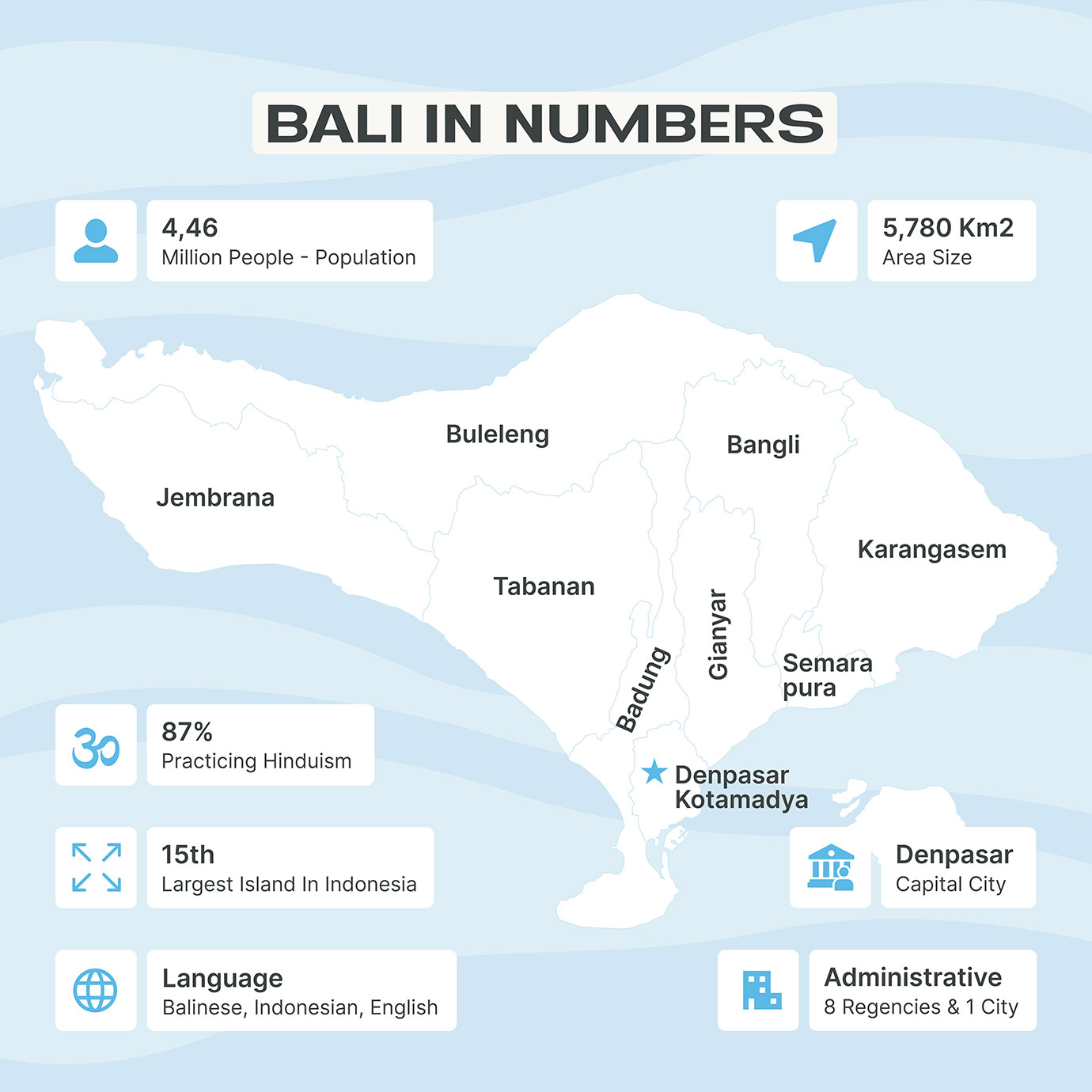
Talking about location, Bali is part of the Lesser Sunda Islands chain, which includes Bali, Lombok, Sumbawa, Flores, Sumba, and Timor. Bali is predominantly Hindu, with 87% practicing the religion, an anomaly in Indonesia, where the majority are Muslim. Balinese people are bilingual, speaking Indonesian and Balinese. Many Balinese also speak English as a third language, due to Bali’s tourism landscape, although it’s often concentrated in the tourist hotspots.
Where Is Bali Located?
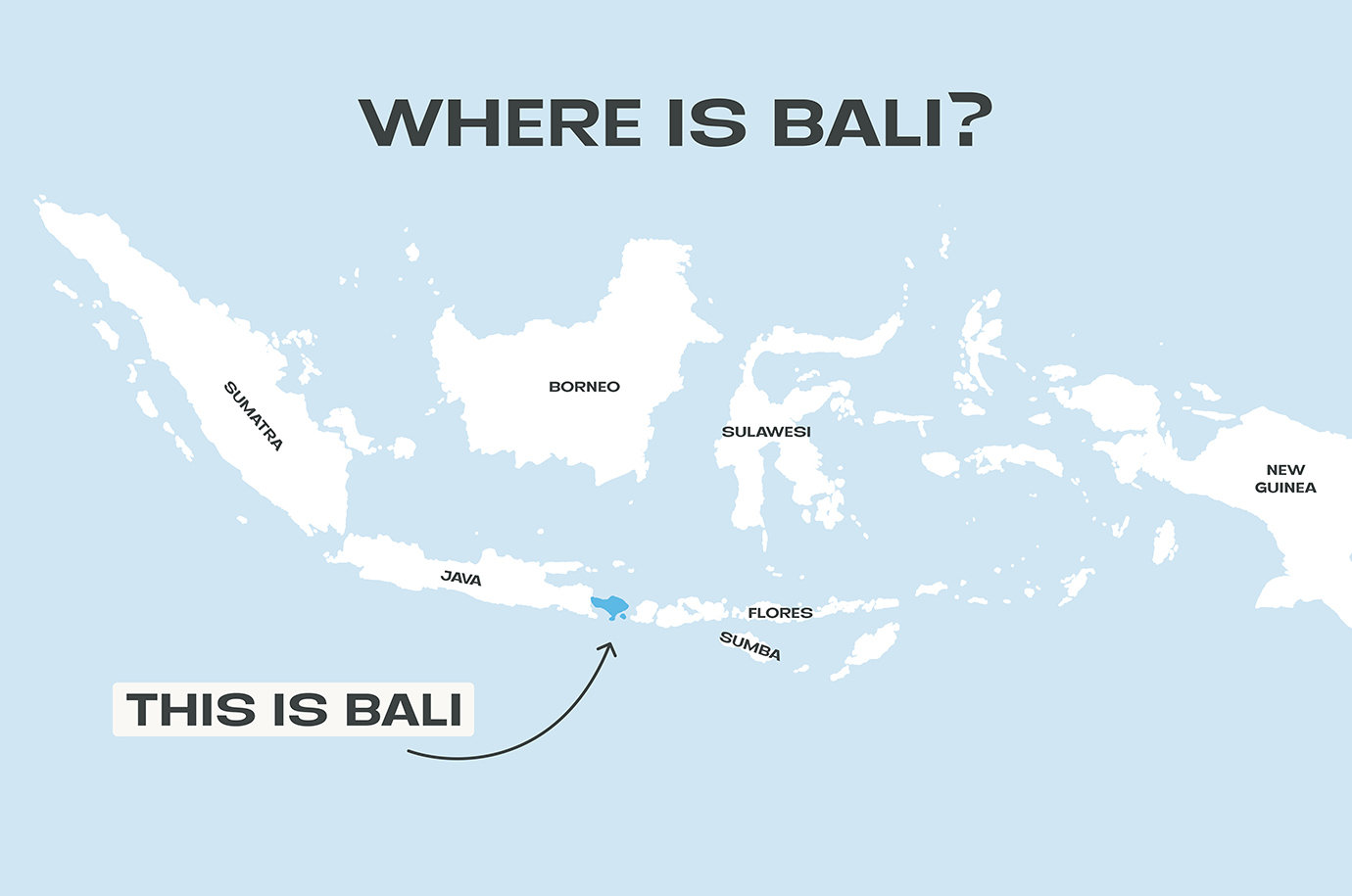
So, where is Bali, and what country is Bali in exactly, if you want to find it on the map? Bali is located in Indonesia, the largest archipelagic country in the world. The island sits between Java and Lombok, and the island’s shape is often likened to a fish. Compared to other large islands, such as Borneo (Kalimantan), Papua New Guinea, Sumatra, and Sulawesi, Bali is relatively small.
How Big Is Bali and Who Lives There?
How big is Bali? The area of Bali covers 5,780 square kilometers (2,230 square miles). The size ranks Bali as the 15th largest island in Indonesia. How many people live in Bali? The island is home to 4,46 million people, where the Bali population is spread across eight regencies (Badung, Bangli, Buleleng, Gianyar, Jembrana, Karangasem, Klungkung, and Tabanan) and one city (Denpasar). Denpasar is the largest city in Bali and serves as both the administrative and commercial center.
A Short History of Bali
I can spend hours discussing the history of Bali, starting with the Dong Son culture of the Bronze Age, which introduced the bronze-working technique. The result? The largest bronze drum in Southeast Asia, known as the Moon of Pejeng, was created during this period. But it wasn’t until the 14th century that the Majapahit Kingdom conquered the island and reshaped the Balinese society, including the caste system and royal dynasties.
Many Hindu priests, nobles, craftsmen, and artists fled to the island of Bali when the Muslim kingdom defeated the Majapahit empire in the early 16th century. And that was the foundation of why Bali became predominantly Hindu. During the Dutch occupation, Bali was promoted as a tourist destination. Many Western artists, including Walter Spies and Antonio Blanco, resided in Bali in the 1930s. Bali continued to become the tourist hotspot after Indonesia’s independence in 1945, before it became a surfing paradise in the 1970s, and remains so to this day.
The Unique Culture of Bali
What sets Bali apart from other islands or provinces in Indonesia is how the religion shaped the culture. Known as the Island of the Gods, Bali has over 20,000 temples! The Hinduism practiced in Bali differs from that in India. The notable differences are in the daily offerings practice, the calendar system (Balinese uses Pawukon, which consists of 210 days), the Nyepi Day as the new year, and the monotheistic worship of Sang Hyang Widhi Wasa as the singular divine entity.
The Balinese also believe in the concept of Tri Hita Karana. The philosophy focuses on the harmony among humans, nature, and the divine. Subak is the standout example. It’s more than an irrigation system to water the rice fields. It is also tied to the temples and ritual ceremonies during all stages of the rice cultivation cycle, as well as community meetings about planting schedules and conflict resolution, and to preventing erosion through the use of terraced rice fields.
Practical Travel Guide to Bali (2025)
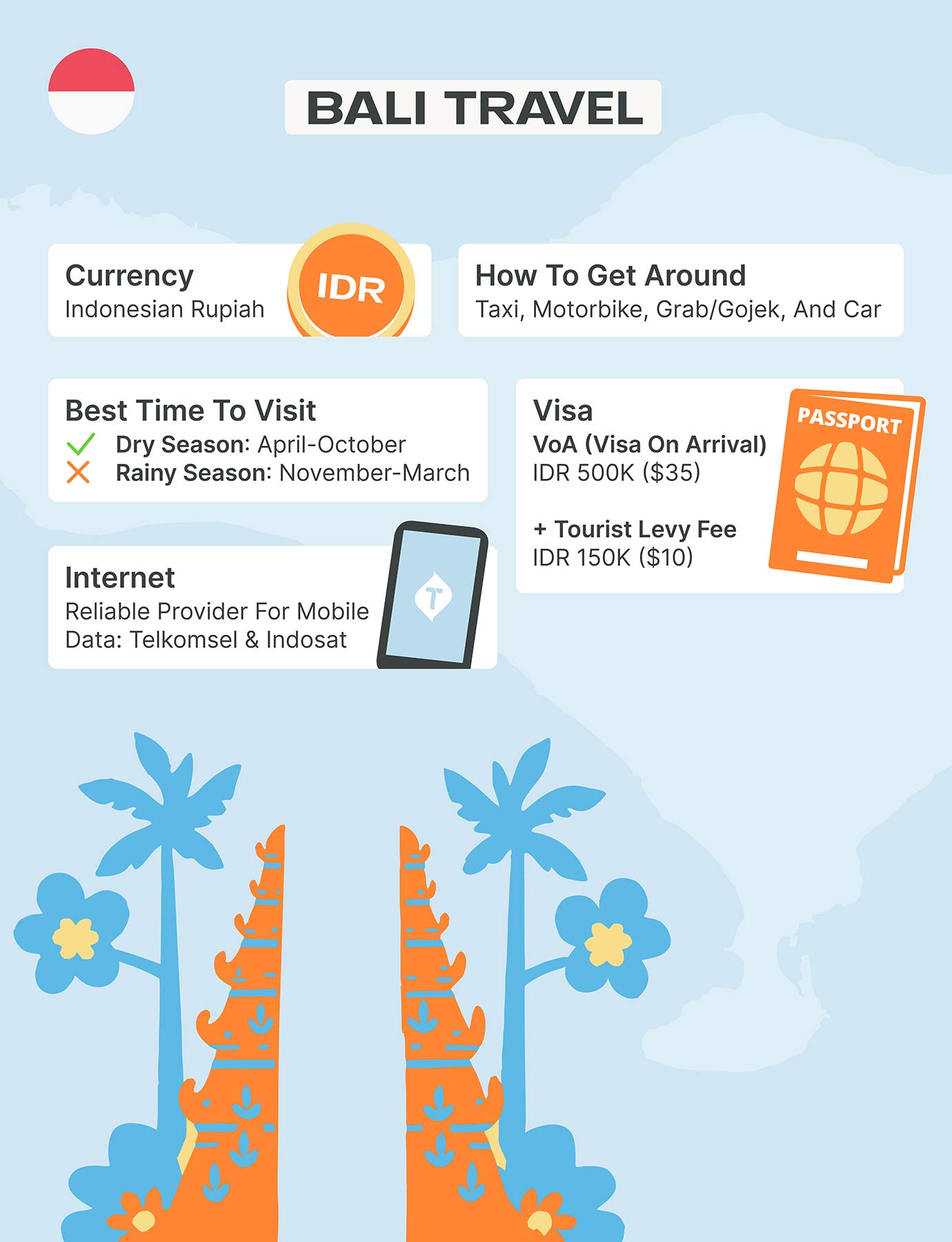
Top Attractions and Activities in Bali
Iconic Natural Landmarks
One of the most undeniable facts about Bali is its unbelievable natural beauty. Visiting these places should be at the top of your itinerary:
Mount Batur. One of the active volcanoes, aside from Mount Agung. Known for the sunrise trekking with the view of Lake Batur.
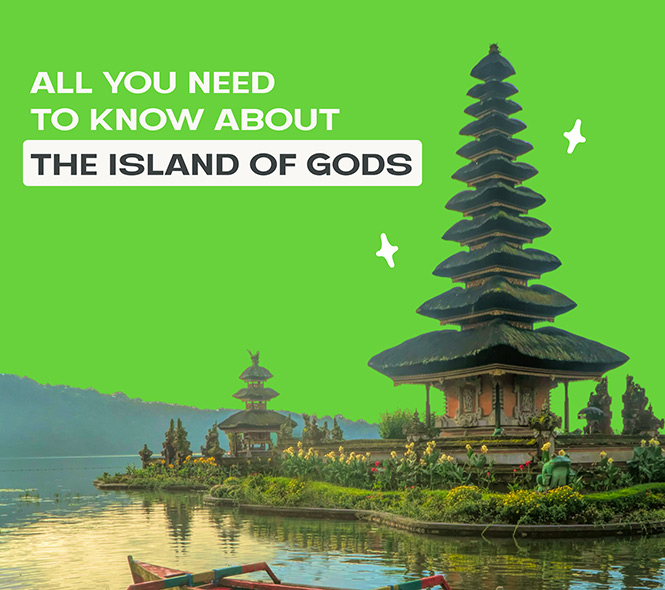
Lake Bratan. Sitting above 1,200 meters above sea level, it’s one of the lakes in Bali known for its floating-like temple, Ulun Danu Beratan Temple.
Sekumpul. One of the most beautiful waterfalls in Bali, it features seven cascades with a height of about 80 meters.
Jatiluwih Rice Terrace. Jatiluwih is one of the famous rice terraces in Bali, besides Tegallalang. The area was declared a UNESCO World Heritage Site in 2012.
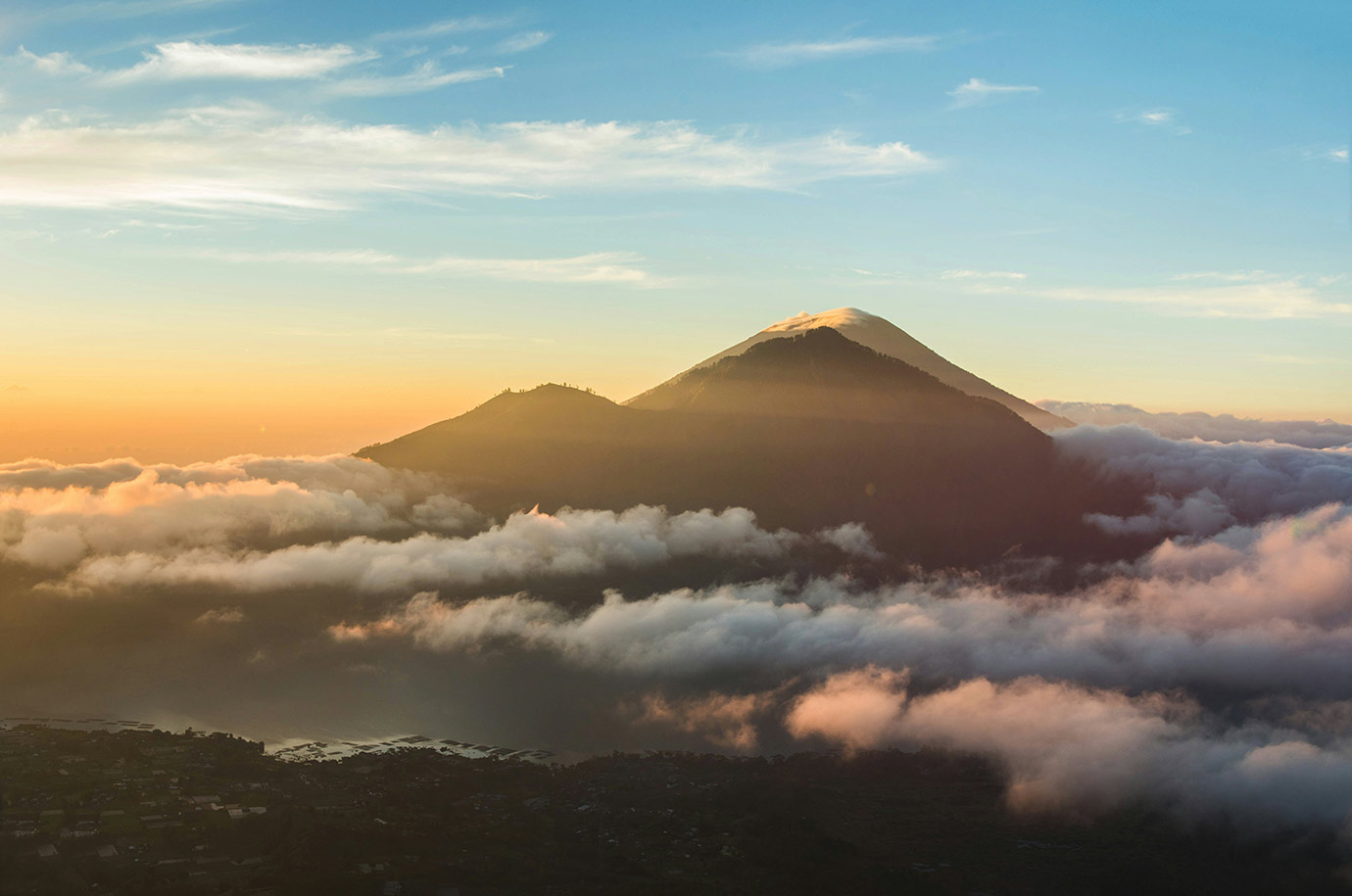 Source: unsplash.com
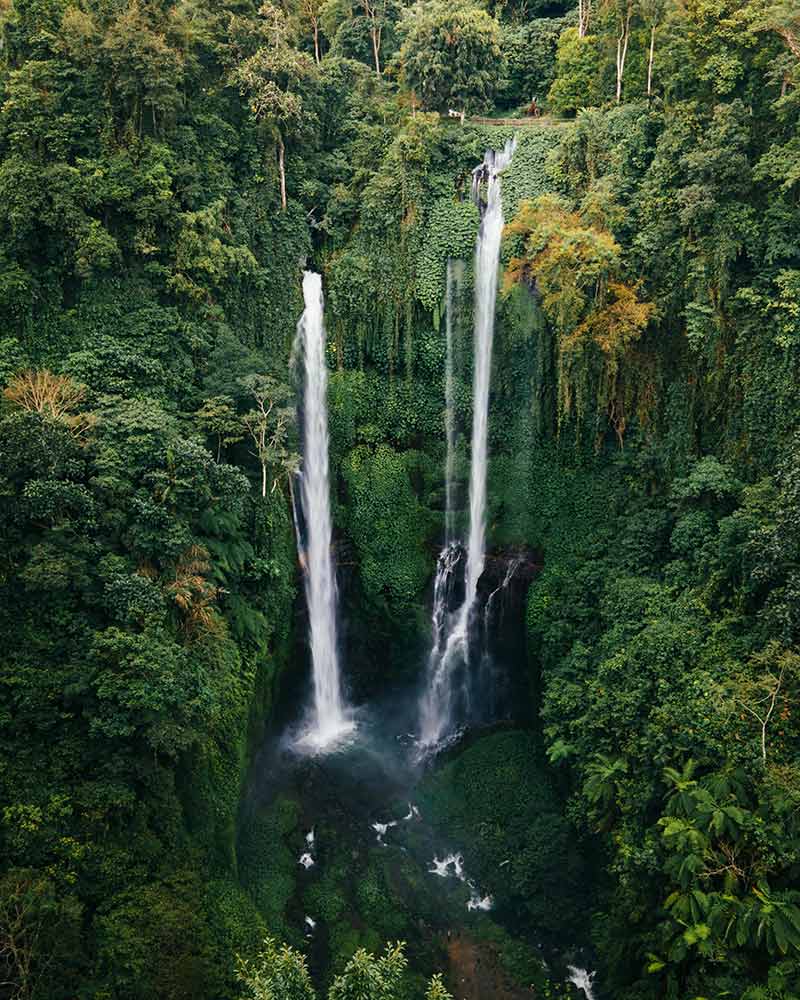 Source: www.pexels.com
Spiritual and Historical Temples
There’s no Bali without the temples and vice versa. The temple in Bali acts as more than just a worship place. It’s also a place for religious ceremonies and community gatherings. These are some of the most important temples in Bali:
Besakih Temple. As a Mother Temple, it’s the most significant temple in Bali. Sitting at the slope of Mount Agung, Besakih has become the spiritual center for over 1,000 years.
Tirta Empul Temple. One of the best temples in Ubud, Tirta Empul, is renowned as the site of melukat, a purification ceremony in Bali.
Tanah Lot Temple. Tanah Lot acts as one of the seven sea temples and is positioned to protect the island from evil spirits.
Ulun Danu Beratan Temple. Dedicated to Dewi Danu, the goddess of water, lakes, and rivers, the temple serves as the spiritual center for the Subak irrigation system.
 Source: unsplash.com
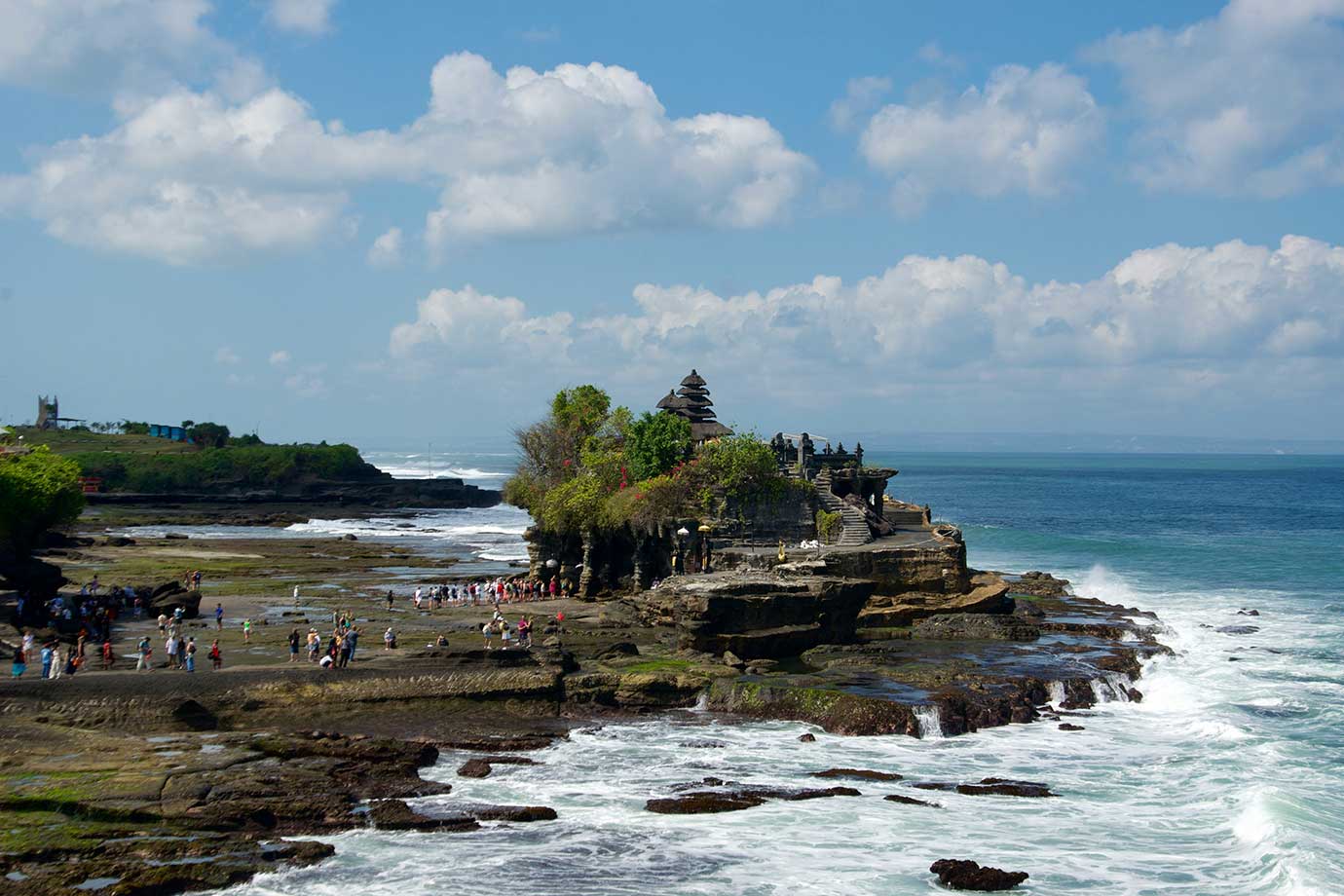 Source: unsplash.com
Adventure and Beach Activities
What activities can you do in Bali? Plenty! Bali has many adventurous things you can explore, such as:
Surfing. Bali and the world-class surfing places are legendary. Padang Padang, Medewi, and Kuta are just a few of the surfers’ playgrounds, from beginners to pros.
Diving and Snorkeling. The eastern and northern parts of Bali are notable for their diving spots and a paradise for snorkelling, like Amed, Tulamben, and Menjangan Island.
Fishing. Not popular (yet), but fishing in Nusa Penida, Nusa Dua, and Sanur has become the place to fish mahi-mahi, tuna, giant trevally, and marlin.
Jet Skiing. What’s a better way than cruising and speeding through the Nusa Penida, Tanjung Benoa, and Sanur waters with jet skiing?
Yoga. Balance your mind, body, and soul with the diverse range of retreats and yoga practices in Bali.
ATV, Rafting, and Safari. Explore the ruggedness of Bali’s landscape in Ubud through ATV tours, rafting, and safari at Bali Safari & Marine Park and the Mason Elephant Safari Park.
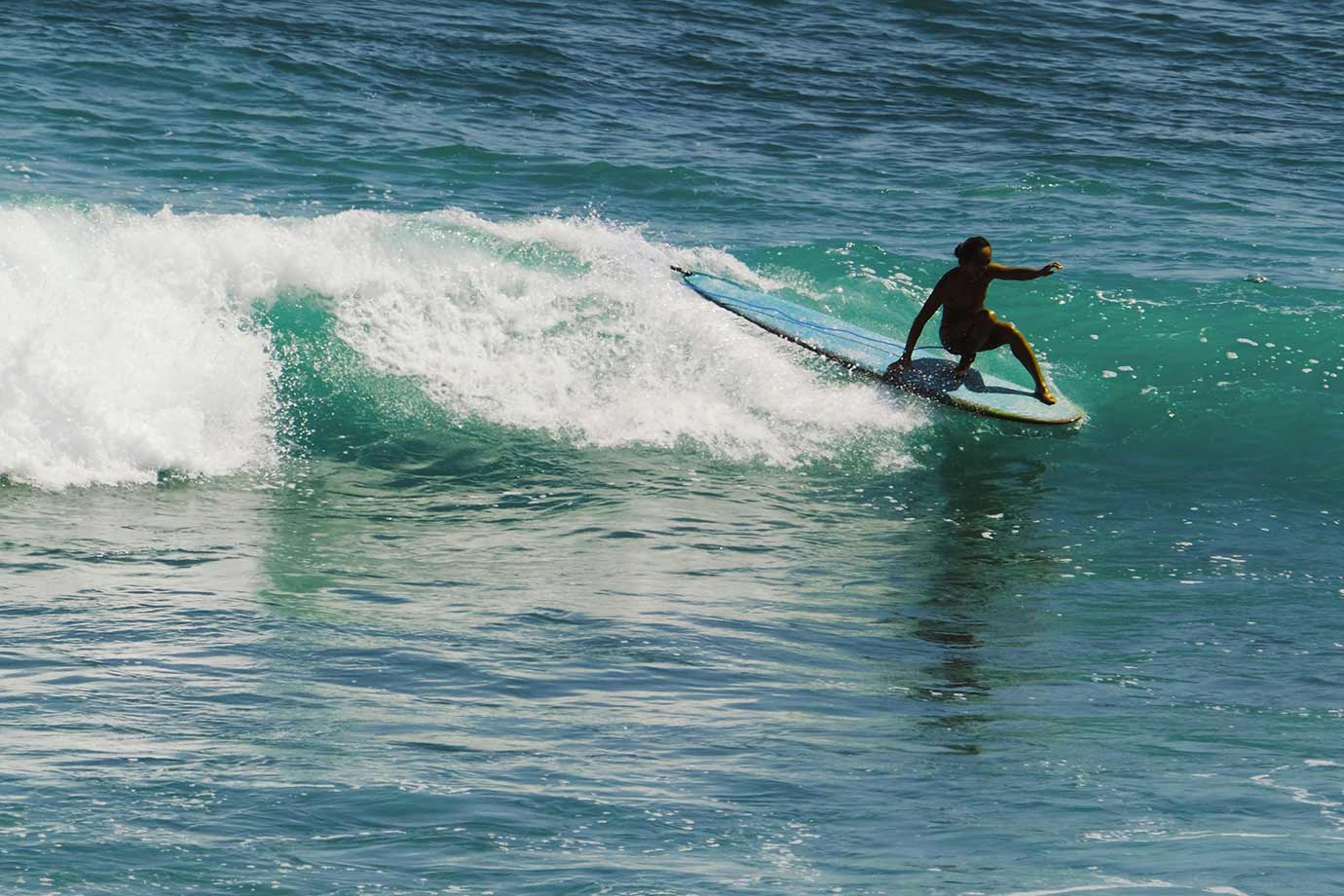 Source: unsplash.com
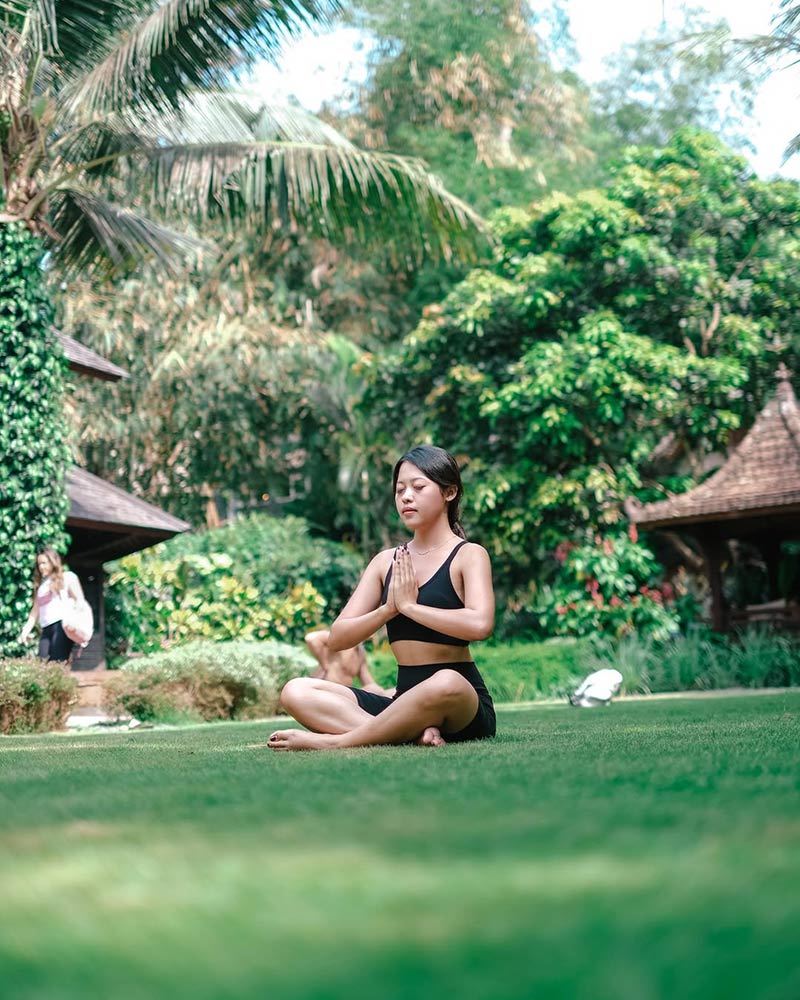 Source: @theyogabarn
Unique Experiences in Bali
Explore Bali’s Spiritual Side
These activities are another way of immersing yourself in the Balinese culture through the spiritual side:
Melukat. The purification ceremony has been an integral part of Balinese rituals for centuries. It’s believed to cleanse the mind, body, and soul of negative energy through bathing in a river, waterfall, or spring, such as at Tirta Empul and Goa Giri Putri Temple.
Balian. Balian is a shaman or traditional healer who specializes in treating physical and mental illnesses, as well as removing spells. Balinese people still believe in modern medicine, but Balian uses traditional herbal medicines, massages, mantras, and ceremonies.
Meditation. Ubud offers numerous retreats and centers dedicated to meditation, often combined with yoga to harmonize your mind, body, and soul.
Sound healing. Known for its ability to heal physical, emotional, and spiritual injuries, sound healing uses vibration and sound to balance your energy.
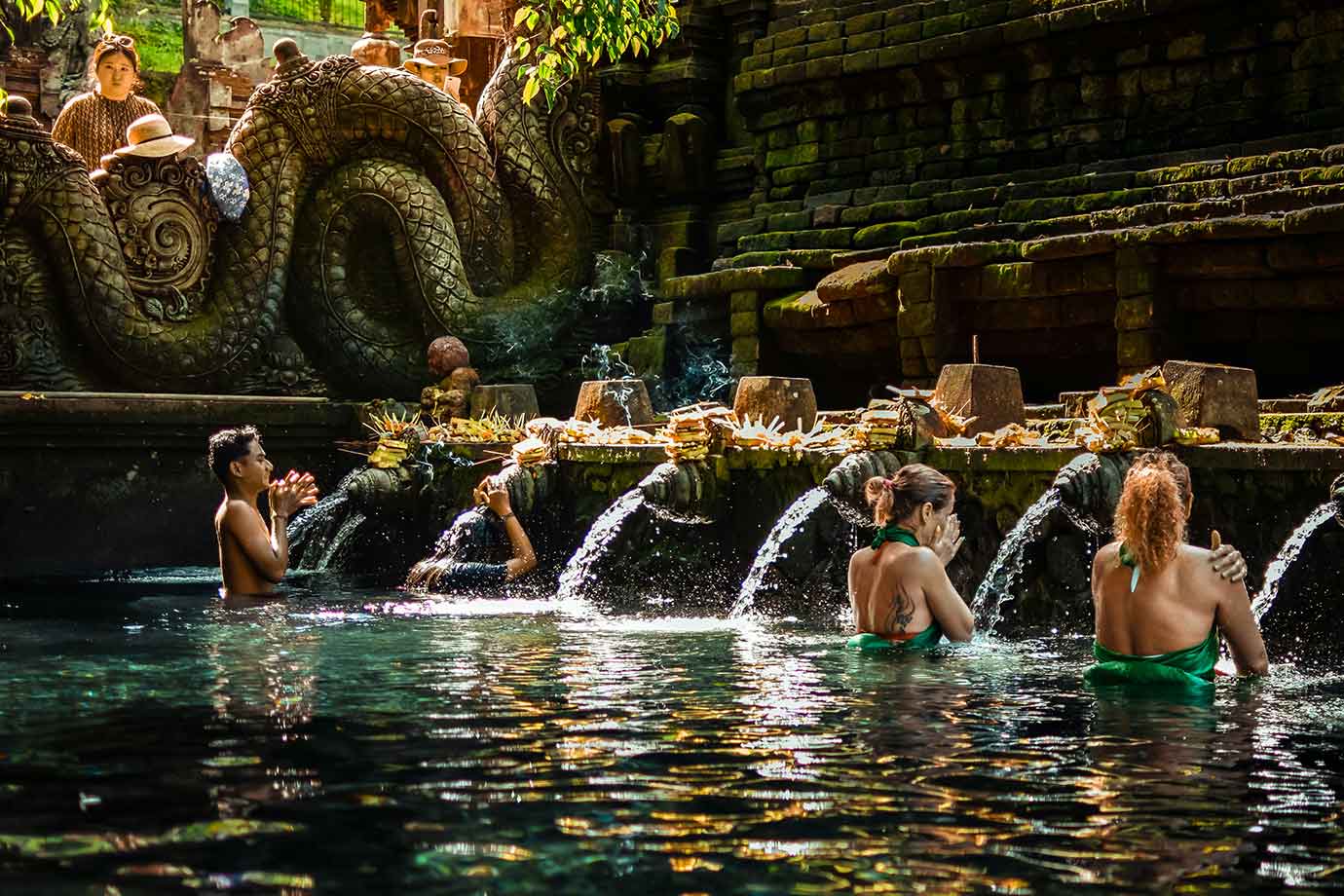 Source: unsplash.com
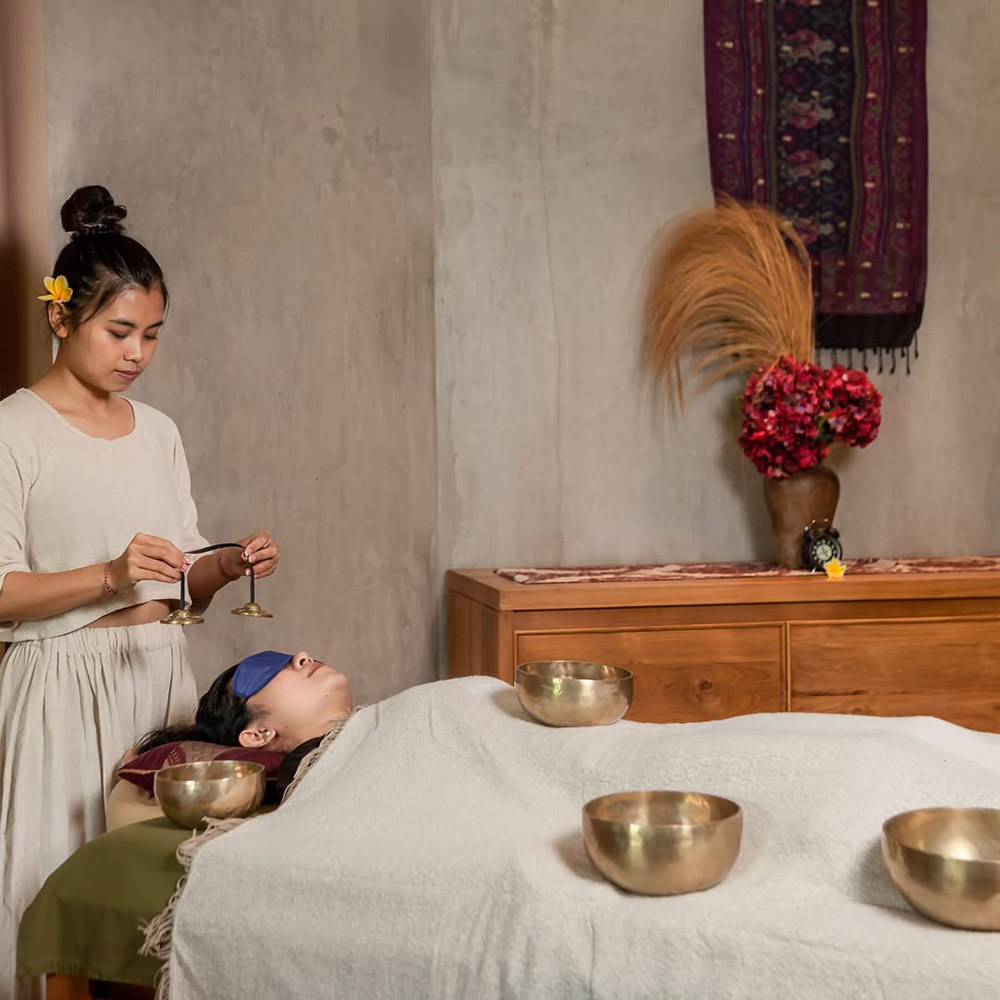 Source: @shaktiwellnessretreat
Taste and Tradition
The best restaurants in Bali may serve you a variety of international dishes with Michelin-level standards, but going to the restaurants is not the only thing you can do:
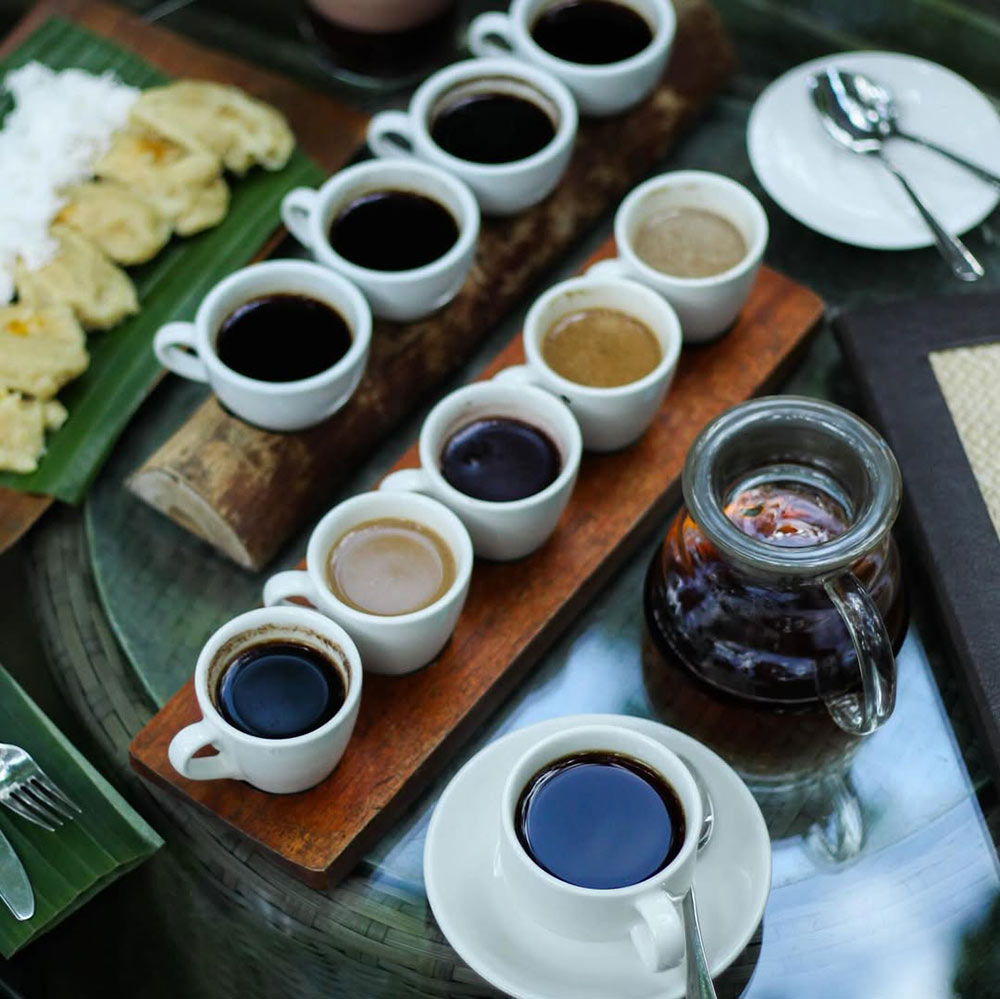
Balinese Coffee. Known for its fruity/floral undertones, as well as bold flavor due to intercropping, you can also try Luwak Coffee. Processed from the Asian palm civet’s digestive system, which only eats the ripest coffee cherries, the coffee beans are then cleaned, dried, and processed once excreted.
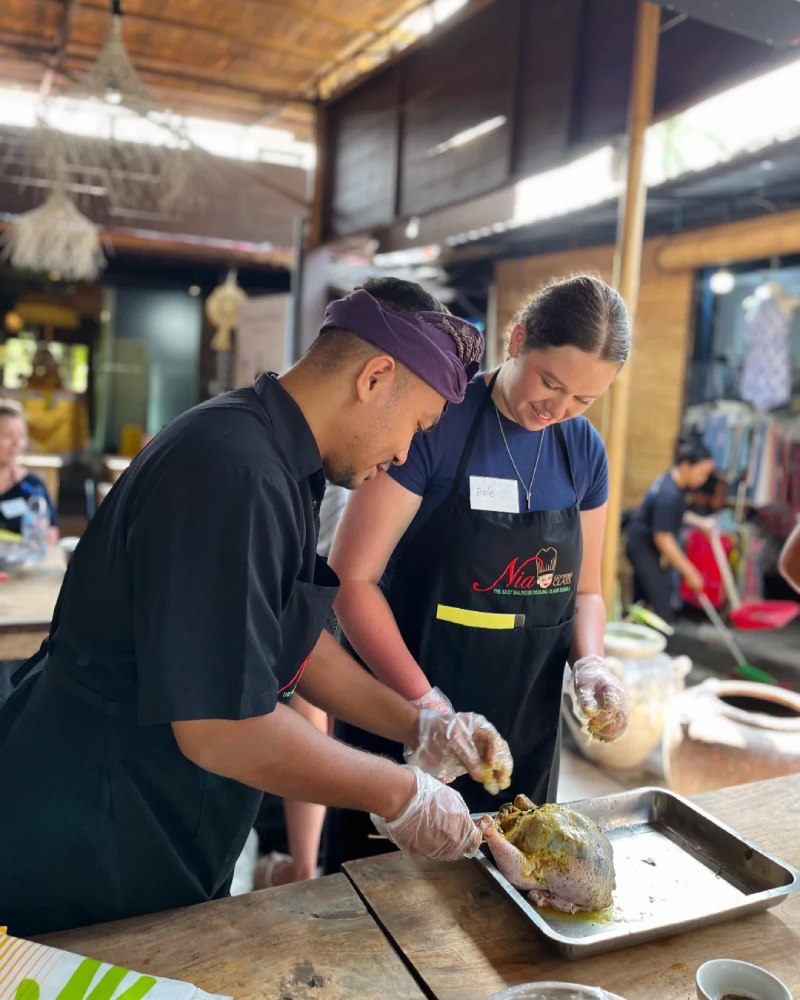
Cooking Class. Indonesian/Balinese cooking is complex, I must admit. But learning how to make Plecing Kangkung or Sambal Matah from scratch is definitely a way to immerse yourself in the Balinese culture.
Night Market. The best place to try all the Indonesian/Balinese food beyond the Indonesian restaurants. Sindhu Night Market in Sanur and Sayan Night Market in Ubud are two famous night markets where you can enjoy chicken satay or laklak for less than $3!
 Source: @niabalinesecookingclass
 Source: @balipulina
Black Sand Beaches
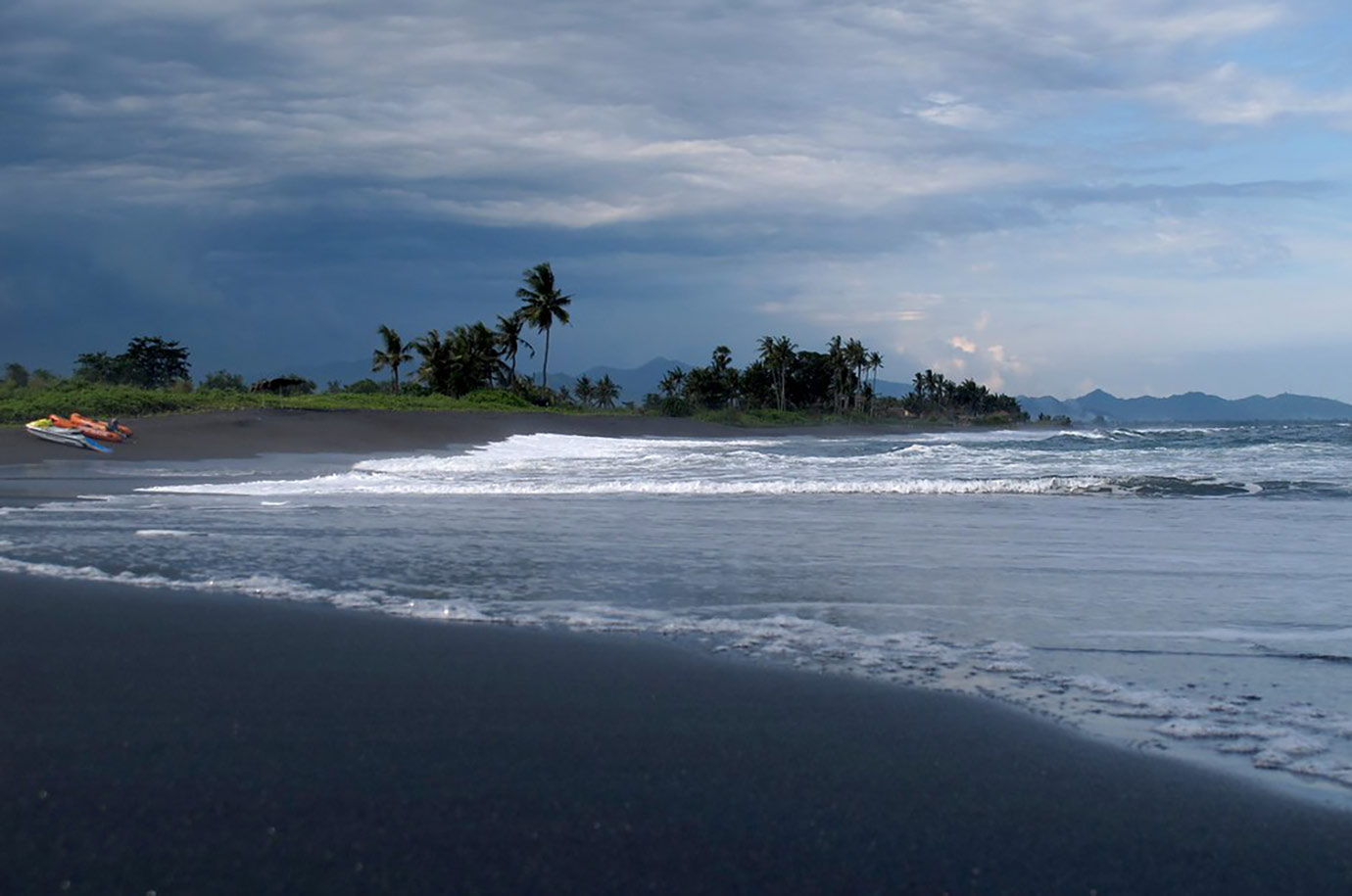
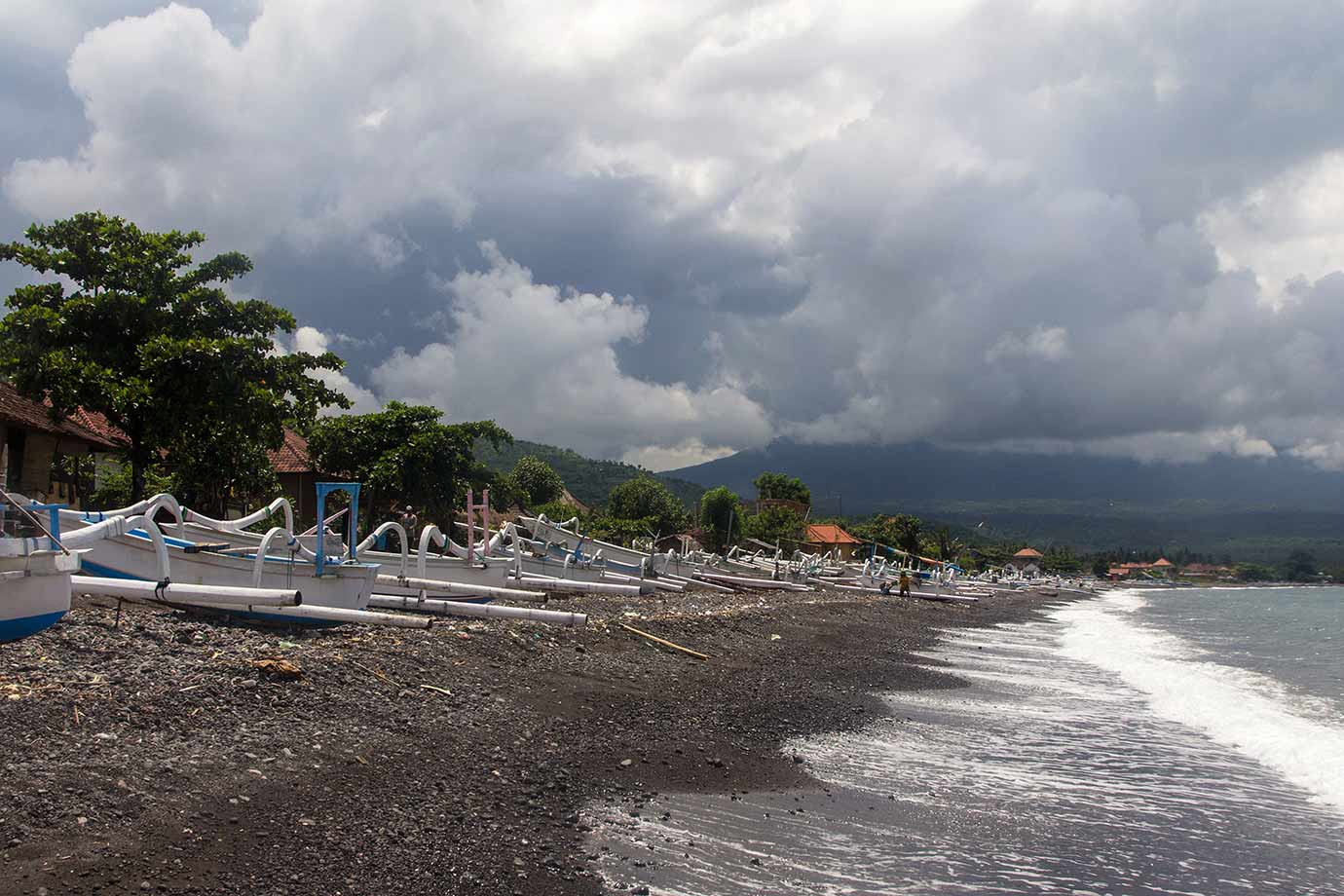
White sand beaches are so boring, don’t you think? Luckily, Bali also has some incredible black sand beaches,which are a result of the volcanic activity that has created these unusual beaches in Bali. The beaches on the east and north coasts, specifically around Amed, Keramas, and Lovina, are known for their striking dark colors. But you don’t need to travel far, as the Canggu coastline is also blessed with black sand beaches, such as Echo and Pererenan Beach. These black sand beaches can become a great photography background, and in the case of Keramas, it is one of the best surfing spots in Bali.
 Source: www.dreamstime.com
 Source: wikimedia.org
Bali Festivals and Holidays
You’ll never run out of events in Bali, from music concerts to weekly parties. But when it comes to traditional holidays and festivals, these are a few of the events in Bali you need to know:
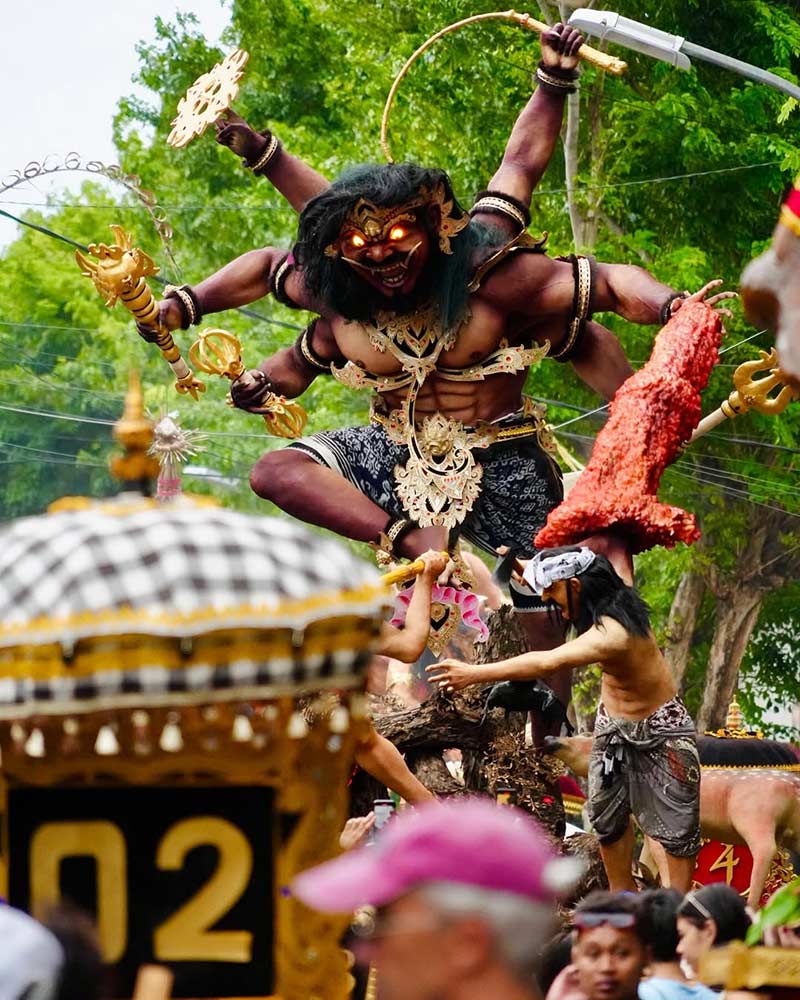
Nyepi (Silent Day). Usually falling in March, Nyepi is the Balinese New Year. It’s the day when everything is closed (including the airport!) and Bali is pitch-dark. You’re not allowed to go out and are forbidden to turn on the lights for 24 hours. The night before, the Ogoh-Ogoh parade showcases Balinese arts and creativity through giant statues.
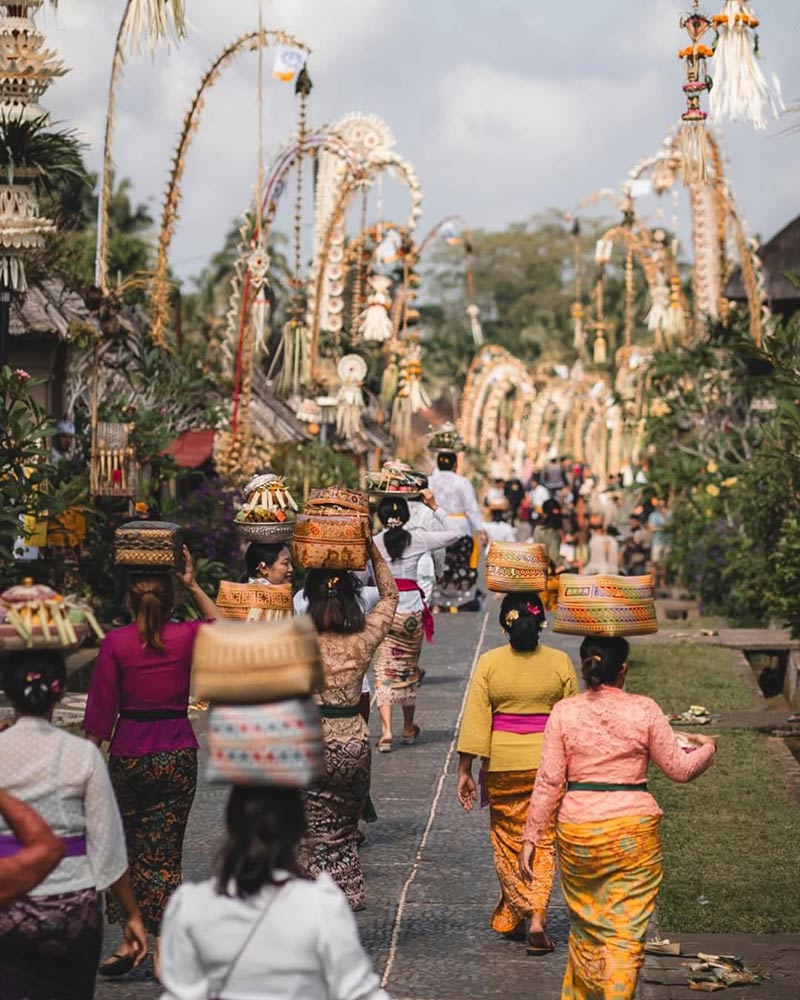
Galungan. Celebrated every 210 days, Galungan celebrates the victory of good over evil. The Balinese believe that the spirits of their ancestors are coming to earth from heaven. Galungan is marked by erecting penjor, or the curved bamboo poles with coconut leaf ornaments.
Kuningan. Ten days after Galungan, Kuningan marks the end of the celebration when the spirit returns to heaven. Kuningan features yellow rice as a symbol of prosperity and gratitude.
Odalan. Occurring every 210 days, Odalan is the anniversary of the temples, when they are decorated with offerings and ornaments made from coconut leaves.
Tumpek Landep. Tumpek Landep is a ceremony that honors items made of metal, including cars, motorbikes, knives, and keris (traditional Indonesian swords).
 Source: @theelephantubud
 Source: @thestoneslegianbali
FAQ
Bali is not an independent country, but it’s one of the 38 provinces in Indonesia.
Expert Opinion
You don’t have to ask about what to do in Bali because the island’s different landscapes alone will keep your itinerary full! It’s a popular tourist destination for a reason. You can transition from the sunrise hike to diving, and then explore waterfalls and beaches. Beyond nature, it’s the culture that makes Bali such a unique place to visit. The thousand temples, the way of life, and the religious ceremonies create the magnets you won’t find anywhere else in Indonesia.





Hi, Catur here. I’ve been living in Bali for 12 years, and you bet I’ve done all the temple visits and explored Bali’s best beaches and waterfalls. Adding my hospitality background and 13+ years of fiction writing to the mix (four self-published Indonesian books and a 2020 Wattys Award), I’ve shared the local insight about 100+ restaurants, cafes, bars, hotels, and beach clubs on the island, because I want you to get the best experience!